Showing posts with label ideology. Show all posts

17 April 2008

Perhaps I've Been Too Harsh...

Thinking about my previous post on honesty in architectural design, and reading over some issues of the wonderfully produced Retrospecta, lent to me by a colleague, I felt it necessary to follow up with some caveats. Actually just one slightly long-winded caveat.

What I seem to be implying is a drive towards the Corbusian mentality, perhaps not in explicit formal or methodological property, but in general mentality. Something about the deep lyrical poetics of architecture, that resonates with something you can't quite place within yourself:

Architecture is the learned game, correct and magnificent, of forms assembled in the light.

— Le Corbusier

Rather, the volumetric, the proportional, the human scale. The challenge of rightfully assembling a series of interlocking moments (and the experience of interlocking moments) that touch the heart and lift forward in an arc towards beauty. I just finished Le Modulor, and found that I could have written (or have already written, closely enough to be startling) entire passages in the book. I found that the interlocking Fibonacci strands, tailored to a convenient if somewhat arbitrary 6'-0", was exactly the determining system I had set up to determine a range of type sizes in a first pass at my portfolio. Arriving at these conclusions I feel both vindication and revulsion. Strange moment, to have discovered a mind that is almost your own, or illustrates a path which you could easily take.

Here's the caveat: architecture is not just about the play of forms and the play of volumes. The framework of the Modulor threatens strangulation, asphyxiation. The tool is so definitional it may easily become overwhelming and stifle actual creation.

So my point is that explorations of surface and skins and folding and blobs aren't invalid. Even the postmoderns – and mostly I shudder at that kind of work – aren't really invalid. The mentality flies in the face of volumetric delight – it's all surface – but then again, why should I be so tied to a dogma?

So here I am, mostly freewheeling. I haven't come down on any side yet, which is both exciting and terrifying. But then again, maybe that is the only attitude that is appropiate in this contemporary age – absolute paralysis punctured by spasmatic creation, reactionary and schizophrenic thought.

05 April 2008

Grid and Grid Systems - Brief Definition, Clarifications

The idea of the grid is of something to be extruded into. Grids are seen as marking space, that is creating an arbitrary but useful division of space which organizes an intrusion upon it. The mentality of the grid is one of imposition – not the imposition of axes, mind you, which are implied, but the further imposition of geometry upon an already existing infinite space. If we're talking about architectural creation, then the architect has already lost control. The project becomes bound to a system, defined by a system, which is not of the architect's creation. Or more accurately, if it is of the architect's creation, it is a creation with implicit axioms and assumptions about the operating principles of space.

By "Cartesian space" and "grid systems," I don't necessarily mean right-angled working lines, or linear geometry. Grids may exist as deformations (Reinmennian geometry, or spherical, or hyperbolic geometry, to name some examples) and may even be self-contained. What I mean more specifically is the Modern mentality – "Modern" in the technical sense, or "Modernist" if you like – that the nature of space is rational and neutral, that space exists at all in an infinite and pervasive way, such that grid lines may be drawn upon it, and coordinates may be plotted upon it.

The difference is between geometry and arithmetic, in the historical sense of the terms. Euclid (nor Phidias and Iktinos, for that matter) was not Cartesian in this way – the operations of the compass the straightedge and the pen all grow from within themselves. Each circle drawn on paper (or marble!) viciously creates both the circle and the space to which it relates. The relationship between the two only exists because they were created – further, the circle and its center only exist by an act of force. The plane itself, arguably Cartesian and arguably a geometrical concept necessary in the creation of the circle, is created by an act of force. The infinite did not exist beforehand, but exists within itself and within the representation of itself, and is contained only within the representation of itself.

It is the rational which is impossible to grasp. It flits away and slips sideways – it is impossible to proceed one from the next without an act of destruction, a jump from the scratched and tangible surface of the vellum sheet, through a point in the air, to begin again another world unrelated to the first except through that point in the air. The rational procreates in one next to the other, not touching but dimly aware of the other's existence.

I feel that there is a much more elegant way to put this, but perhaps words are not the correct medium. The larger point for architecture is simple: grids and grid systems carry assumptions about the operations of space, which become inextricably tied to assumptions about the organization of space, which is to say program, circulation, &c., which is to say architecture. Part of the great dissonance I feel towards the mentality outlined in a previous post about the Columbia GSAPP is this dissonance – that such projects claim to have broken the grid system while remaining entrapped within a Cartesian system. Claims about intrusion, elbowing out, growing from the center, architecture developing from itself and pushing itself violently into the world just inherently don't work if it is assumed that these operations create architecture upon existing space.

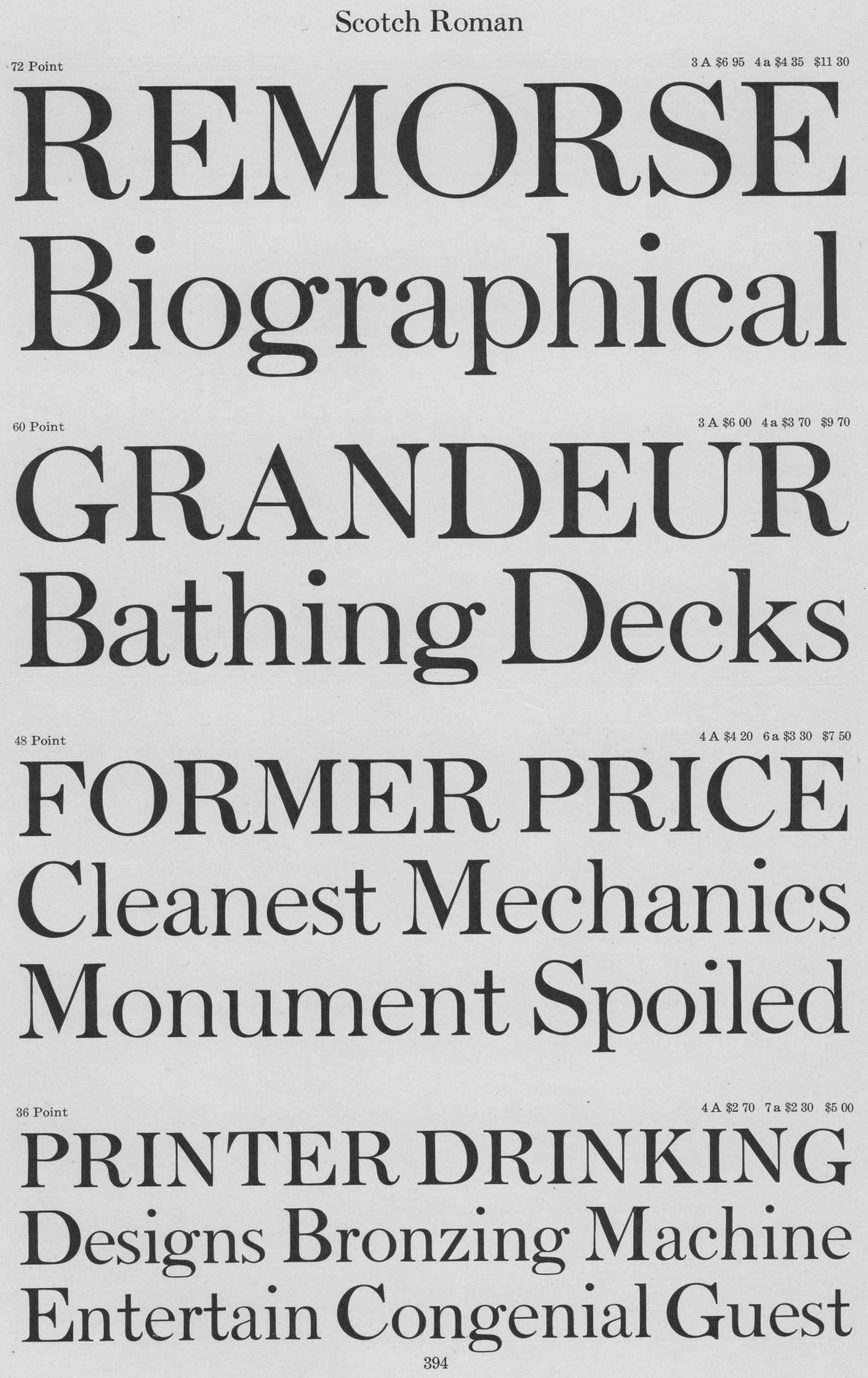
No, rather, it is the act of creation which is a violent event. The tabula rasa is only catastrophic as an afterthought, while the true creation of space from within itself (and into no thing) is the implied catastrophe embodied in an event. It's the reason that the Greek Temple works so fantastically, why the Parthenon speaks today as an incredible crystaline carving out of space itself, while the French Neoclassical fails so spectacularly in the same goal – the Pantheon in Paris tries to be all about support and the application of structural logic to form, but in the end is all about grids. It's the difference between Jenson and Didot, in a sense the same difference between the Carolingian and Neoclassical scripts, between the high French Gothic and La Madeleine.

03 April 2008

Rashtrapati Bhavan

Because I had just been re-skimming it, and a lot of the operating methodology is directly applicable to this journal, I thought I would post a link to the thesis I wrote last year as part of my Bachelor's:

Defining a Nation

Viceroy's House, Government House, Rashtrapati Bhavan

A Study in Iconography, Social History, and Semiotics

{ Figures & Photographs }

This is something I will be sure to return to – and hopefully refine. It would really have benefitted from another week or so of editing, but what can you do.

12 January 2008

Hello, World!

“Come in, make yourselves comfortable. Pull up a chair. I have quite a story for you. Or rather, many stories. Stories about steel girders and structural philosophy, of unexploded ordinance and sandbags protecting the altars of High Gothic Cathedrals. I have stories about the vibrancy of the sidewalk, about the death and rebirth of the street, about how the avenues and boulevards breathe – expanding and retracting in rhythm through the years. I have stories about the city."

This blog is a place for me to try an old type of writing in a new type of atmosphere. I've carved out something of an identity for myself in other places, with other intents. This experiment is something else. It's not intended to be literary or artistic (except that nothing really can't be, anymore), and it's not intended to be personal, as far as anything can be impersonal. This experiment is something else. It's about architecture and it has a vaguely pretentious title: don't let that throw you. I'll explain how that came to be, and all the catastrophic subtext, in the first essay I post. [ - Just kidding! I'll get around to it eventually, and work it into one of these essays... no promises as to when though.]

But yes, you heard right, architecture. The word has developed a sort of copper-coated distaste. We've arrived, at this dawn of the 21st century, at an incredibly fascinating point in the history of architectural practice and theory. The world is rapidly urbanizing, and theories about the city and how to relate to it architecturally are springing up and flourishing with astonishing rapidity. Globalization, post-modernism, new urbanism, third-wave international style, historical revivalism – ideologies clamour for space in the squares, fling cobblestones at each other in a vicious dance driven by entrepeneurs, bureaucrats, financeers. Public, private, ownership, borders, transportation, infrastructure – the very definitions and consequences of these concepts, once stable building blocks of the city, are flickering and shifting. The idea of the city is shifting. The idea of architecture itself is shifting. It's a very exciting time to be building.

I'm extremely fascinated by all of these things – both personally and professionally. This is a place for me (and others, if you would like to contribute) to share some of my thoughts on the practice, theory, and culpability of architecture. The tone will be more academic than some of my other creative projects, but the ideas that I'm trying to address are incredibly lyric. My goal: to pin down the ephemeral core of architecture, to assess and critique the current state of affairs, to try to push through the boundaries of architectural thought towards a new type of architecture.

And what, after all, is architecture?

You employ stone, wood, and concrete, and with these materials you build houses and palaces: that is construction. Ingenuity is at work. But suddenly you touch my heart, you do me good. I am happy and I say: "This is beautiful." That is Architecture.

( le Corbusier, Vers une Architecture, 1923)

As an introduction, that ain't half bad. Architecture is radical. Architecture is fun. Above all, architecture is no longer serious. So come in, pull up a chair. Don't be shy. Stay and listen for a bit.